Finding the Right Structure for Development: HB Reavis’ Story with Nestor
How HB Reavis Built Skills Clarity and Better Development Conversations with Nestor
At some point, every growing company hits the same question:
We know where we want to go. But do we really know if our people have what it takes to get there?
For HB Reavis, this question surfaced after the company introduced a new strategy following a broader transformation. Direction was clear. Priorities were set. What mattered next was execution.
Leadership had a strong view on where the organization was heading and which functions would play a critical role. The challenge wasn’t ambition or intent, but translating strategic expectations into concrete role requirements and focused development across teams.
To support this next phase, HB Reavis chose a structured way to define skill expectations, assess current capabilities, and guide development conversations with consistency.
That’s when they partnered with Nestor.
Client Overview
HB Reavis is an international workspace provider that designs, builds, and manages office and mixed-use spaces focused on productivity, wellbeing, and the day-to-day experience of the people who use them.
Founded in 1993, HB Reavis operates across several European markets, delivering workplace destinations in major cities and business hubs. The company is involved across the full lifecycle of real estate, from investment and design to development and long-term operations.
This integrated, hands-on model means HB Reavis works closely with multidisciplinary teams and client-facing roles, where expectations evolve quickly and expertise matters. As the organization continues to adapt to changing ways of working, having clear skill expectations and consistent development conversations has become an increasingly important part of how teams perform and grow.
When Expectations Outgrew Existing Structures
Once the new strategy moved from planning into day-to-day work, attention shifted to how it was landing inside teams.
As expectations became more explicit, especially in client-facing roles, it became easier to see where existing role definitions no longer reflected what the business was actually asking of people.
The gap wasn’t abstract. It showed up between:
the skills people had been assessed and developed against
and the capabilities now required to perform well in the role
This wasn’t something that could be solved by adding another document or running a one-off exercise. While spreadsheets or isolated tools could capture parts of the picture, they wouldn’t support consistent interpretation or meaningful follow-up.
What HB Reavis needed at this stage was a way to make expectations visible, comparable, and usable, so development discussions could be grounded in something concrete, not assumptions. This is where Nestor entered the picture, offering a structured way to translate evolving role expectations into a shared reference point for both employees and managers.
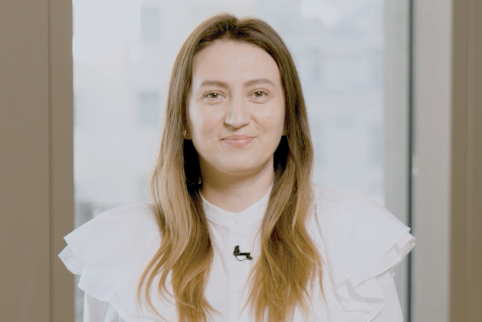
We had identified a mismatch between existing skills and the company’s expectations. Nestor provided us with a much-needed framework.
—
Kamila Novosadova, HR Manager at HB Reavis
Before Nestor: When Effort Outpaced Structure
Before introducing Nestor, the challenge was consistency. Role descriptions were in place, development goals existed and feedback conversations happened, but there wasn’t a shared, repeatable way to:
define skills at role level, beyond titles and responsibilities
see gaps across individuals or teams in a comparable way
anchor development discussions in something concrete and objective
Without that common reference point, conversations often stayed broad. People knew development mattered. What was less clear was where to focus first and how to track progress over time.
That gap in structure is what ultimately pushed HB Reavis to look for a more reliable approach.
Why HB Reavis Chose Nestor
Once HB Reavis decided to bring more structure into skills development, the question quickly shifted from whether to act to how to do it properly.
The team had already considered simpler approaches like spreadsheets, internal templates, and existing tools that could be adapted. While workable on the surface, those options would have relied heavily on manual upkeep and individual interpretation. Over time, that would have made consistency difficult to sustain.
What HB Reavis was looking for was a solution that could formalize skill expectations without becoming rigid, and support development work without adding friction.
Flexibility was essential. So was ease of use.
This is where Nestor stood out.
This could theoretically be achieved in other ways, like Excel files or other tools. But Nestor’s flexibility and user-friendly approach made this process very easy for us.
—
Kamila Novosadova, HR Manager at HB Reavis
Nestor provided a clear framework for defining role-specific skills, while remaining adaptable enough to fit how HB Reavis works in practice. Instead of forcing teams into a fixed model, the platform allowed them to apply structure where it mattered most.
Just as importantly, it was designed to be used, not managed.
Employees could see expectations clearly, track progress, and mark development milestones along the way. Subtle visual cues and progress indicators helped keep people engaged, without turning development into a box-ticking exercise.
People find it very efficient, and they also see small gamification elements that motivate them to do more.
—
Kamila Novosadova, HR Manager at HB Reavis
For HB Reavis, that combination of flexibility, usability, and a strong underlying framework is what made Nestor the right choice over more manual or fragmented alternatives.
Turning Skills into Clear Expectations and Better Conversations
Once the framework was in place, HB Reavis shifted from defining why skills mattered to deciding how they should be used in practice.
The first focus was on role clarity. Instead of relying only on job descriptions, which tend to describe responsibilities rather than capabilities, the team defined skill sets for specific roles, starting with client-facing positions. This helped translate expectations into something people could actually work with.
Skills became a shared reference point. Employees could see what was expected beyond their day-to-day tasks, while managers had a clearer foundation for development conversations, grounded in competencies, not assumptions.
We use defined skill sets for the specific roles, client-centric roles in our organization. This helps us clarify the expectations for people, not just from the perspective of the job description, but also from the perspective of the competencies they need to have for the position.
—
Kamila Novosadova, HR Manager at HB Reavis
That structure changed the quality of discussions across teams.
By encouraging self-reflection before conversations even started, HB Reavis created space for more honest, more constructive dialogue. Managers and team members were no longer talking past each other. They were working from the same picture.
Over time, this approach also gave the organization a clearer view beyond individual conversations. Patterns began to emerge and skill gaps could be seen at both individual and team level, making it easier to decide where development efforts should be focused next.
It supported self-reflection and the discussion between people leaders and team members, so they could clearly define who is where and what needs to be developed. This also gave us a clear overview of individual and team skill gaps, and visibility on where we should focus.
—
Kamila Novosadova, HR Manager at HB Reavis
What made this work wasn’t just the definition of skills, but how easily they could be put into practice. With Nestor, HB Reavis combined structure with practicality, so development never felt heavy or forced.
Employees responded to that balance, progress became visible and milestones felt tangible. Development stopped being an abstract concept and started to feel like something people could actively move forward.
As a result, skills discussions became clearer, more focused, and easier to sustain, not because they were mandated, but because they finally made sense to everyone involved.
Making the Rollout Work: Leadership, Communication, and Trust
Defining skills was only the first step. Making the initiative work in practice depended on how it was introduced and supported across the organization.
HB Reavis focused on a few things that made the difference:
Defining the right level of detail: Skill sets detailed enough to be meaningful, without overwhelming people.
Strong senior sponsorship: Someone who understood the purpose, gave feedback, and visibly supported the initiative.
Clear, consistent communication: Explaining the why. Repeating it. Clarifying it again. And outlining each step so people always knew where they were in the process and what came next.
This combination created the structure and trust needed for the rollout to work and for skills discussions to feel purposeful rather than performative.
When Hard Conversations Became Easier
That clarity became most tangible once skills were visualized.
Seeing current skill levels alongside what roles required changed how development conversations unfolded. Feedback stopped being abstract; managers and employees were looking at the same picture.
One of the biggest realizations for me was how powerful the visual representation of current skills versus the required level can be.
—
Kamila Novosadova, HR Manager at HB Reavis
That shared view created space for more openness on both sides. Conversations moved away from defensiveness and toward development. The visual structure gave managers a safer way to address difficult topics.
Feedback wasn’t delivered out of context or as a surprise. It was grounded in data, role expectations, and an agreed framework. As Kamila explained, this made it easier to talk about what wasn’t working yet, without tension and without blame.
When this picture is used with openness and courage on both sides, between the manager and the team member, it has strong potential to enable high-quality development discussions. It also provides managers with a safe and structured context to discuss development gaps.
—
Kamila Novosadova, HR Manager at HB Reavis
Working with Nestor: A Partnership That Made the Difference
As the work progressed, one thing guided how we partnered with HB Reavis: staying close to the reality on the ground.
From our side, this meant setting up regular check-ins from the start. These conversations gave us space to discuss open topics, answer questions as they came up, and adapt the setup based on real feedback from the team.
What we highly value are the regular check-ins; they give us space to discuss open topics, raise questions, and share feedback on the platform. We also really appreciate the high level of responsiveness and reliability in delivering what’s promised. On top of all of this, it’s very motivating to work with people who are genuinely passionate about development and who celebrate every milestone with us.
—
Kamila Novosadova, HR Manager at HB Reavis
We know that skills initiatives raise practical questions along the way. Sometimes that meant walking through specific features in more detail. Other times, it meant providing additional materials, clarifying options, or pressure-testing whether a certain approach would work for HB Reavis’ development goals.
What mattered was being responsive and reliable, following through, every time. That way of working is intentional for us.
We see customer success as an ongoing responsibility, not a phase. Staying close, communicating clearly, and being reliable in the details is how we make sure our customers can move forward with confidence.
—
Raluca Apostol, CPO at Nestor
This approach helped turn implementation into a shared process rather than a handover. Progress was discussed openly, challenges were addressed early, and milestones were treated as moments to acknowledge together.
For us, that’s what strong customer partnership looks like, and it’s how we support our customers long after the first rollout.
What’s Next for HB Reavis
With the initial assessments nearing completion, HB Reavis is already looking ahead to what comes next.
The focus now is on defining concrete next steps for the pilot group and identifying which other teams could benefit most from the same structured approach. While the organization remains intentionally selective about scale, one priority is clear: keeping development conversations consistent, meaningful, and grounded in real skill expectations.
Rather than chasing coverage for its own sake, HB Reavis continues to invest in the quality of discussions between managers and employees, using structure where it helps, and keeping the focus on thoughtful, individual development.
That balance is what they plan to carry forward.
Building Skills Clarity That Lasts
Every organization reaches a point where strategy demands more than ambition.
At HB Reavis, skills became the bridge between direction and execution. By bringing structure to expectations, visibility to gaps, and consistency to development conversations, they created a foundation that teams could genuinely work with.
Curious How This Would Look in Your Team?
If you’re navigating a similar moment where growth depends on making skills visible, discussable, and actionable, we’d love to talk.
👉 Book a free demo and see how Nestor supports clear expectations, honest conversations, and meaningful growth.