Building a Performance Process People Trust: Frigotehnica's Journey with Nestor
There is a particular kind of frustration that appears when a process is technically working, but not quite helping.
At Frigotehnica, performance reviews were taking place. Managers had tools and employees had conversations. But the process was spread across different formats and documents, which made it harder to compare feedback, follow progress, and see what people needed next.
Over time, that fragmentation changed the feel of the process. What should have been a space for growth could easily become another administrative cycle: collect input, complete the review, move on.
Frigotehnica wanted something different. A process with more structure, more visibility, and more room for real development conversations.
With Nestor, they began to build exactly that.
Client Overview
Frigotehnica is a Romanian refrigeration company with a long history in commercial and industrial cooling systems. Founded in 1949, the company has grown into a recognized name in the refrigeration market, delivering complex projects for retail, industrial clients, and logistics centers.
Over the years, Frigotehnica has played an important role in the development of Romania’s modern refrigeration market, supporting major retail and industrial projects and expanding its expertise across complex environments such as supermarkets, cold rooms, warehouses, food processing units, breweries, and ice rinks.
Today, Frigotehnica operates as part of VINCI Energies Romania and continues to provide technical solutions across Romania and Bulgaria, with service teams covering preventive maintenance, emergency interventions, commissioning, and long-term operational support.
Before Nestor: Too Much Manual Work, Too Little Visibility
The reviews were already happening at Frigotehnica. Managers collected input, employees sat through evaluations, and at the end of each cycle, feedback existed somewhere; in a spreadsheet, in a file, in someone’s notes from a conversation six months ago.
The problem was what happened around the process.
Each team worked differently. Different formats, different documents, no shared baseline. Without a central place for it all to live, comparing feedback across people or tracking someone’s growth over time meant digging and even then, the picture wasn’t complete.
The process was primarily manual and fragmented. Performance reviews were conducted using different tools and formats across teams, making it difficult to ensure consistency and fairness.
—
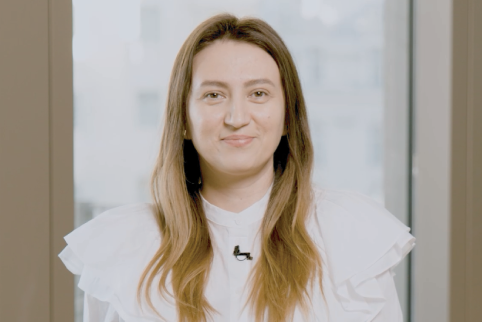
Alice Stan, HR Manager at Frigotehnica
The work also took time to pull together. Without a centralized system, gathering insights across the organization required extra effort. Identifying skill gaps was harder than it needed to be. Connecting individual development with broader business needs took even more work.
For managers and employees, that changed the feel of the process. Performance reviews risked becoming something to complete, rather than something to learn from.
The tools we used did not effectively support continuous feedback or meaningful conversations about growth, which reduced the overall impact of the performance review process.
—
Alice Stan, HR Manager at Frigotehnica
That was the real gap. Not the absence of performance management, but the absence of a structure that made the process easier to trust, easier to follow, and more useful for growth.
Bringing Performance Into One Place
For Frigotehnica, choosing Nestor wasn’t about adding another layer to performance management. The old process already had enough layers.
The decision was simpler than it sounds in retrospect. They needed one place. Somewhere a manager could open a review, see what the employee had said about themselves, check how their goals were tracking, leave feedback that didn’t vanish into a folder.
And do all of that without cross-referencing three different documents to remember where the previous conversation had ended.
That kind of continuity sounds basic. It isn’t, until you have it.
Before, a lot of the context lived in people’s heads; each manager’s own read on who was developing and how. When someone sat down for a review, the conversation could be good. What it couldn’t be, reliably, was connected to what came before it or what would come after.
Nestor gave that memory to the process itself.
Managers got a shared framework for evaluating competencies. Employees could see what was actually being assessed and why. They could track their own progress, complete self-reviews, and update objectives without the process disappearing between cycles into scattered documents nobody returned to.
Implementing Nestor provided an opportunity to introduce structure, transparency, and consistency into performance management. It also allowed us to place a stronger emphasis on skills development and ongoing dialogue between employees and managers.
—
Alice Stan, HR Manager at Frigotehnica
That second part, the ongoing dialogue, is the harder thing to build, and the more important one. Structure is relatively easy to introduce. You define the fields, set the cadence, train the managers.
What’s harder is changing what happens between the formal moments: whether a manager gives feedback before the annual review comes around, whether an employee knows what they’re working toward in a given quarter, whether the conversation about growth happens at all or only gets scheduled because it’s required.
With Nestor, performance management started to move away from a once-a-year administrative cycle and toward something more continuous: regular feedback, clearer goals, and better visibility into how people were growing.
The process became easier to follow. And because it was easier to follow, it became easier to trust.
From Romania to Bulgaria: Expanding What Worked
The first rollout gave Frigotehnica something concrete to build from.
After seeing positive results in Romania, the team decided to extend Nestor to Frigotehnica Bulgaria. It was a practical next step, but also a meaningful one. Expanding the platform meant bringing the same structure to more of the organization, so performance management didn’t depend on location, team habits, or separate ways of working.
Following the very positive results in Romania, we decided to implement Nestor across Frigotehnica Bulgaria. The platform simplified the process for both managers and employees, while giving us better visibility into skills, development needs, and overall organizational capabilities, which is particularly important for our niche business.
—
Alice Stan, HR Manager at Frigotehnica
Frigotehnica works in a technical field. The people who do the work well have spent years building the kind of knowledge that doesn’t come from a job posting ; specific, applied, accumulated through experience that takes time and is difficult to replace.
Knowing where that expertise lives in the organization, and where it’s still developing, matters more than a standard headcount review would suggest. It shapes decisions about where to invest in people and what the business can realistically take on next.
The expansion also gave Frigotehnica a more consistent way to talk about performance across countries. Not a copied-and-pasted process, but a shared structure that could support local teams while keeping the broader organization connected.
Extending Nestor to Bulgaria was a natural next step. Our goal was to ensure a consistent and structured approach to performance management across the organization, while supporting employee development and alignment with broader business objectives.
—
Alice Stan, HR Manager at Frigotehnica
When Reviews Became About Growth Again
Once the structure was in place, the feel of the process changed.
The “complete the review and move on” quality started to fade. Managers could give feedback against a real framework rather than rebuilding context from scratch each cycle. Employees could see what was expected of them and track their own progress without waiting for a formal check-in to find out where they stood.
Nestor has helped shift our mindset from viewing performance management as a purely administrative task to treating it as a continuous, development-focused process.
—
Alice Stan, HR Manager at Frigotehnica
The timing changed. Feedback started arriving outside of review windows, closer to the moments that prompted it. Goals got updated when the work shifted, not when a calendar reminder appeared. People filled in self-reviews without a deadline pulling them toward it.
That matters because growth conversations need context. Without it, feedback can feel random or disconnected from what came before. When people engage with a process outside of the moments they’re required to, it usually means the process has started giving something back.
Nestor improves communication by making it more continuous, transparent, and structured, with regular feedback, clear goals, and real-time updates replacing one-off, disconnected conversations.
—
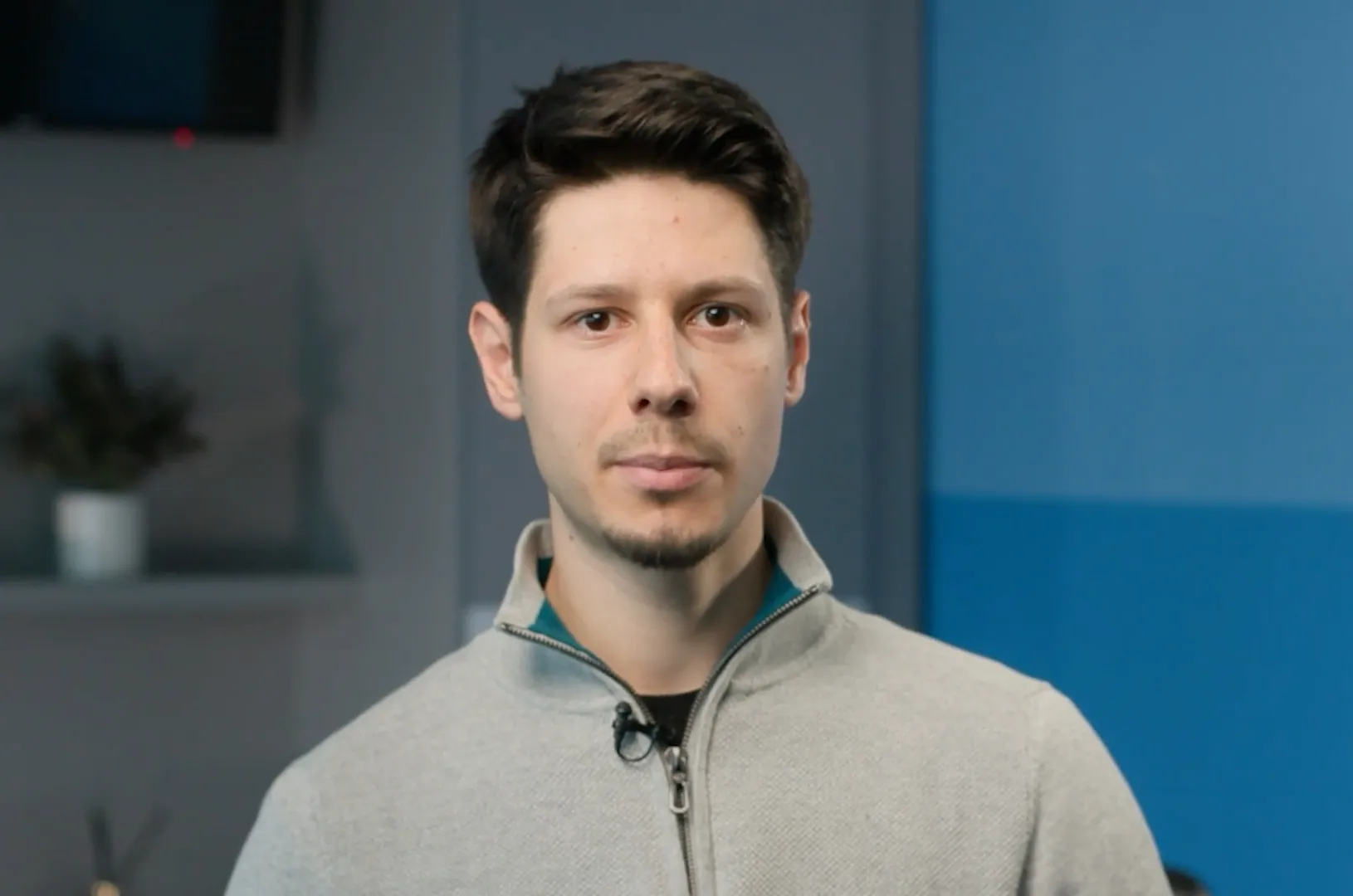
Matthias Gugiu, HR Generalist at Frigotehnica
The cumulative effect was a process that had stopped feeling like a checkpoint. It became an ongoing record of someone’s work and growth, one that existed between the formal moments, not only because of them.
The process became somewhere people came back to. When a goal shifted. When feedback was worth leaving. When something in the work deserved a record.
Where the Value Accumulated
The value of a well-run performance process is genuinely difficult to put on a slide. It doesn’t compress into a single number. It accumulates in the hours that stop going to overhead, in development gaps caught before they’ve had time to widen, and in decisions that become possible once the right information is actually there.
At Frigotehnica, that’s where it landed.
Before Nestor, the cost of running the process was largely invisible, absorbed into manager time, lost in the space between review cycles, built into the effort of chasing formats across teams and countries. That overhead didn’t appear on any report.
But it had a real effect on how much time managers had for actual development conversations, and on how quickly the organization could see where its capabilities were growing or falling short.
When the process is simple, structured, and transparent, it becomes much easier to foster meaningful conversations about performance and development.
—
Alice Stan, HR Manager at Frigotehnica
For a business built on specialized technical knowledge, this is where the return becomes concrete. Time that previously went to locating and reconciling information could go to the conversation itself. Skill gaps that might have gone unnoticed until the next formal review cycle had somewhere to surface earlier.
And with Romania and Bulgaria running on the same platform, Frigotehnica could see its own capabilities across the whole organization: one picture, not two separate ones assembled from incompatible sources.
There’s a difference between managing performance and understanding it. In a niche business, the second one is what lets you build on what you actually have.
Support That Stayed Close to the Work
A platform rollout across two countries doesn’t end with the setup. It starts there.
There were decisions to make, questions to clarify, and small adjustments that mattered in practice. What should the process look like for managers? How should employees interact with it? Where could the platform be optimized as the team learned more from real use?
That is where the Customer Success partnership became part of the story.
For Frigotehnica, support from Nestor was not distant or transactional. The team stayed close throughout the implementation, helping with setup, guidance, and continuous improvement as the platform expanded from Romania to Bulgaria.
Our experience with Nestor’s Customer Success team has been very positive. We successfully implemented the platform in two countries within just two years. Throughout the process, the team was responsive, supportive, and proactive.
—
Alice Stan, HR Manager at Frigotehnica
For Frigotehnica, Nestor’s Customer Success team wasn’t a help desk. They were present through the implementation — involved in the ongoing work of making the process better as real use revealed what could be improved, rather than waiting to be called when something broke.
Matthias describes it in terms of what it actually prevents.
Support from Nestor’s Customer Success team makes things much easier. They help with setup, share best practices, and provide quick guidance, so you can optimize processes faster and avoid common issues.
—
Matthias Gugiu, HR Generalist at Frigotehnica
That gap, between support that reacts and support that anticipates, is where implementations tend to either settle into something that genuinely works or plateau into something that merely runs. Frigotehnica didn’t have to navigate it alone.
At Nestor, this is what we mean when we talk about customer success. Not a team that handles tickets, but one that stays close enough to understand what a customer is actually trying to build and invested enough to help them get there.
Making Performance Management Worth Coming Back To
There is a version of this story that ends with a list of outcomes. More structure, more visibility, a process that runs across two countries instead of one.
But what Alice comes back to, when she describes what actually changed, is something harder to put in a metric.
Focus on building a clear and structured framework that is easy for both managers and employees to use. Transparency around expectations, competencies, and evaluation criteria is essential for building trust in the process.
—
Alice Stan, HR Manager at Frigotehnica
Trust. That’s the word she lands on. Not adoption rates or review completion scores. Trust. Whether the people inside a performance process believe it’s giving them something real, or whether they’re moving through it because they have to.
For Frigotehnica, that shift happened gradually and then unmistakably. A process spread across different tools and countries found a center. Reviews that had felt like paperwork started to feel like something worth returning to.
And the conversations that performance management is supposed to generate, about where someone is headed and what they need to get there, started actually happening.
That’s what Nestor was built to make possible.
Ready to make performance management more structured, transparent, and development-focused?
To give you the best experience on our site, we use cookies to store and/or access device information. By consenting, you allow us to process data such as browsing behavior on this site.
Functional
Always active
The technical storage or access is strictly necessary for the legitimate purpose of enabling the use of a specific service explicitly requested by the subscriber or user, or for the sole purpose of carrying out the transmission of a communication over an electronic communications network.
Preferences
The technical storage or access is necessary for the legitimate purpose of storing preferences that are not requested by the subscriber or user.
Statistics
The technical storage or access that is used exclusively for statistical purposes.The technical storage or access that is used exclusively for anonymous statistical purposes. Without a subpoena, voluntary compliance on the part of your Internet Service Provider, or additional records from a third party, information stored or retrieved for this purpose alone cannot usually be used to identify you.
Marketing
The technical storage or access is required to create user profiles to send advertising, or to track the user on a website or across several websites for similar marketing purposes.