
A Letter From Our Founder: Where HR Meets AI in Talent Strategy
6 min read
As we look toward 2026, our direction is not about adding more features or reacting to trends. It’s about addressing a structural problem we see across organizations: HR teams are expected to make faster, higher-impact decisions, while the complexity of skills, roles, and talent data keeps increasing.
That tension is not sustainable.
What has changed over the past year is not just the pace of work, but the level of precision required. Decisions around development, mobility, performance, and pay can no longer rely on assumptions.
They require up-to-date insight into skills, roles, people, and the ability to act on that insight without adding administrative burden.
This is where we see the role of technology becoming more focused, not more complex.
Today, Nestor already supports this shift by giving organizations clearer visibility into skills, opportunities, and talent data. Features like flexible talent frameworks, richer skills profiles, and automated opportunity mapping help HR teams understand where capabilities sit, where gaps are emerging, and how people can grow within the organization.
At the same time, external pressure is increasing. Regulations such as the EU Pay Transparency Directive are pushing organizations to be far more explicit about how roles, skills, and compensation relate to one another.
Meeting these expectations requires a clearer, skills-based foundation that makes decisions explainable by design. We support organizations in this shift, by connecting skills, roles, and talent data in a structured way that enables transparency, consistency, and confidence in decision-making.
Our focus moving forward is to fundamentally reduce complexity, without reducing insight.
To help HR teams navigate growing expectations, stricter regulation, and faster change with systems that make relationships between skills, roles, opportunities, and outcomes visible and defensible.
A deliberate focus on AI
When I think about AI and its role at Nestor, I’m very conscious of one thing: AI only matters if it makes people better at the work they’re already responsible for.
Over the past few years, AI has moved quickly from experimentation to expectation. Many platforms now claim to be “AI-powered,” but in practice, that often means adding a layer of automation without reconsidering the underlying problem. I don’t believe that approach serves HR teams, or organizations, particularly well.
Our focus is different, and intentionally so.
We see AI as a way to reduce friction at critical moments: when skills need to be understood across teams, when talent data becomes too complex to interpret manually, and when decisions need to be made with confidence. These are the moments where HR teams feel the most pressure and where the cost of delay or imprecision is highest.
That’s where we’re applying AI.
This means moving away from static, point-in-time views of skills and talent. In reality, people don’t stand still. Skills develop through work, learning, and experience. Roles evolve. Organizational needs shift. Yet many systems still rely on periodic updates and manual input, creating a gap between what’s recorded and what’s real.
Our ambition is to close that gap.
We are building toward systems that continuously learn from change; systems that reflect how people grow, how roles adapt, and how organizations move over time. Not by replacing human judgment, but by supporting it with insight that stays current, relevant, and usable.
As a founder, I’m particularly careful about where we draw the line. AI should not obscure decision-making or introduce uncertainty. It should do the opposite: make insight clearer, reduce cognitive load, and allow HR leaders to focus on the conversations and choices that truly require human context.
That principle guides every decision we make in this area.
AI at Nestor is not about doing more for the sake of it. It’s about doing the right things quietly, reliably, and in service of better decisions.
Toward HR-AI companions
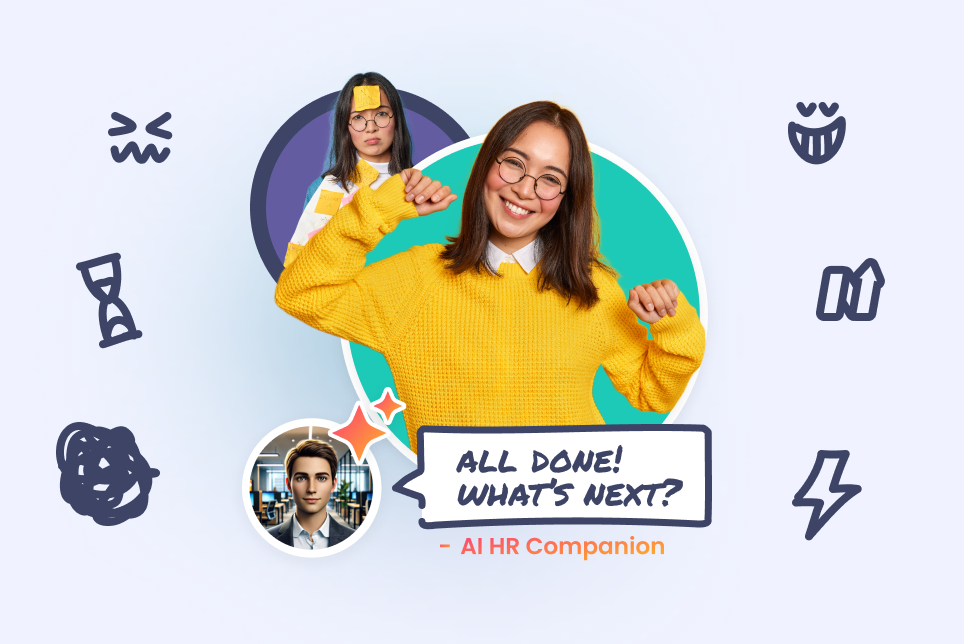
One of the key directions we continue to build on is the idea of HR-AI companions.
These are not general assistants. They are purpose-built agents, each designed to excel at a particular task or objective, whether that’s uncovering skills across the organization, analyzing talent data, or delivering clear insights without manual analysis.
This distinction is important. In complex environments, value doesn’t come from AI that tries to do everything. It comes from systems that take ownership of clearly defined work and do it consistently well.
This approach is already shaping how HR teams work today.
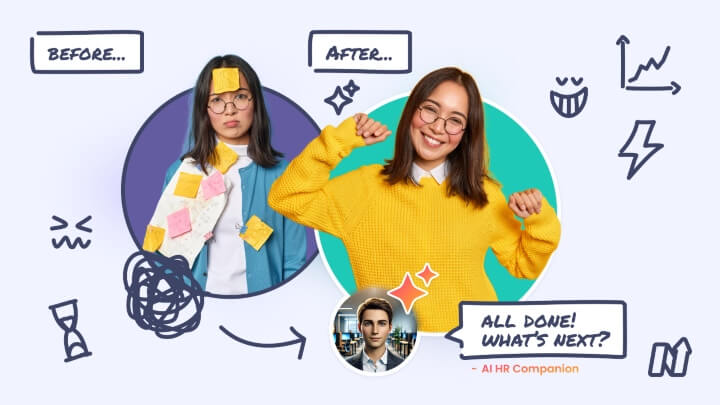
We have already seen how targeted AI-driven automation can significantly reduce administrative effort across specific HR workflows; in some cases saving up to 80% of time spent on routine tasks.
HR-AI companions are a continuation of this approach. The next step is to extend those gains by structuring AI support around specific responsibilities, so more HR processes benefit from the same reduction in manual work, without sacrificing oversight or control.
At the same time, this model allows skills intelligence to stay continuously up to date. Skills mapping should not depend on periodic reviews or manual maintenance. It should evolve as people work, learn, and move, giving organizations a reliable, current view of their capabilities at any moment.
This is what we’re working toward: less effort spent keeping systems up to date, and more capacity to act on what the data is already showing.
Reducing admin work to create capacity
A consistent theme we hear from HR leaders is that too much time is still spent on administration, reconciliation, and interpretation; time that could be spent on strategy, development, and meaningful conversations.
Our ambition is to change that balance.
By automating time-consuming processes and keeping skills intelligence continuously up to date, we are working toward a future where a significant portion of routine admin work fades into the background.
Over time, this approach has the potential to save a substantial amount of effort, freeing HR teams to focus on the work that truly requires human expertise.
Building with intention
As a founder, what motivates me today is not the idea of building something new, but the responsibility of building something that lasts.
Nestor now sits at the center of decisions that affect people’s growth, mobility, compensation, and opportunities. That comes with weight. It requires clarity in what we build, restraint in how we use technology, and consistency in how we show up for the organizations that rely on us.
Our ambition for 2026 is not to chase scale for its own sake, but to deepen impact. Success for us is not defined by how much technology we add, but by how much uncertainty we remove. By how effectively we help organizations understand their capabilities, navigate change, and invest in their people with intent.
And trust remains the foundation of everything we do. Trust that the data reflects reality. Trust that the tools support judgment rather than replace it. Trust that when expectations rise, whether from the business, from employees, or from regulation, Nestor is built to stand behind the decisions our customers make.
Thank you for continuing this journey with us. We don’t take that trust lightly.